

Teaching and Learning at the University: an Inevitable Evolution
Date and Time
Location
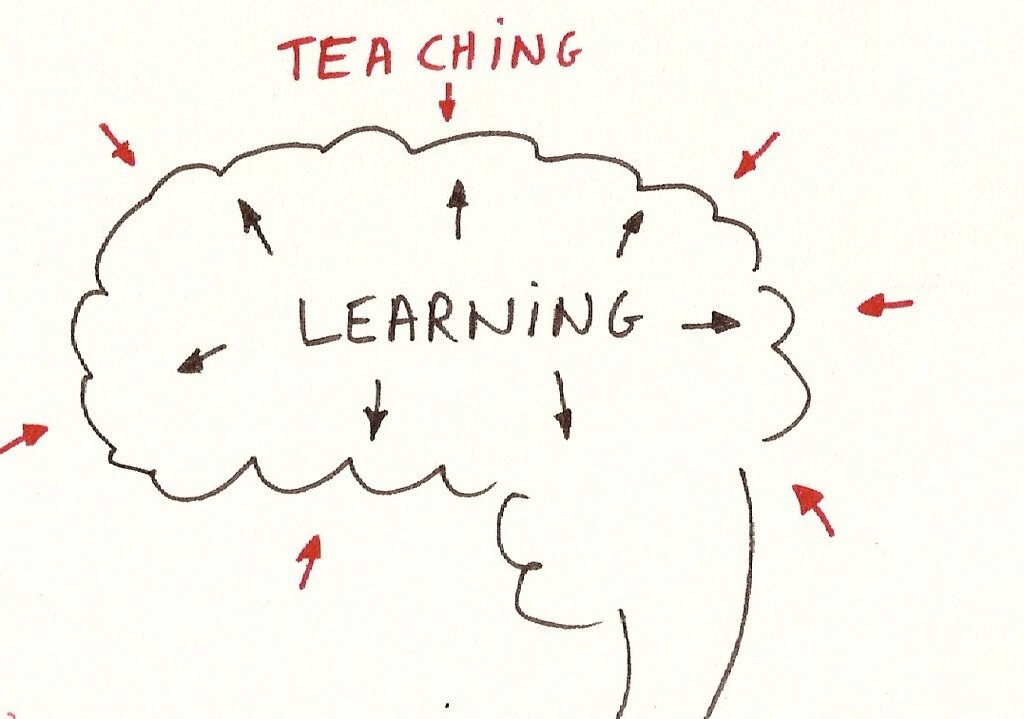
Education has an unattainable goal: to prepare a generation for a future it cannot know. Who could have expected that a pandemic would appear and change education just that year? Some educational levels such as school have found their ways to adapt. However, the university does not seem to find its way. The more traditional teacher-centered model (unidirectional instruction), as well as the student-centered model (proactive learner) have focused on only one of the educational agents, giving little value to their interactions. The first model no longer seems to work. The second has shown more theoretical than practical success. With the aim of going a step further, we are working on a new model of understanding university education focused on ideal interactions. For this reason, the quadruple teacher-student typology model is presented, whose objective is to highlight the value of both roles by describing their ideals: what is a "good" teacher and a "good" student? Human ideals are not meant to be fulfilled, but to mark a point toward which to work. Another of the objectives is to define their bidirectional interactions through which it is hypothesized that they can motivate or burn each other out: good teacher and student (virtuous circle), good teacher and bad student, bad teacher and good student, bad teacher and student (vicious circle). Preliminary results show a possible new way of understanding education and, more importantly, how to intervene in it to prevent us from falling behind.
Organized by: Clara Muñoz Castro (RCC Postdoctoral Researcher at Massachusetts General Hospital (Alzheimer’s Disease Research Unit), Harvard Medical School)
Speaker: Manuel Iglesias Soilán (Teaching assistant in Educational Psychology at Complutense University of Madrid and Visiting Researcher at Harvard Faculty of Arts and Sciences)
Sponsor: RCCHU; Complutense University of Madrid