

RCC and Derek C. Bok
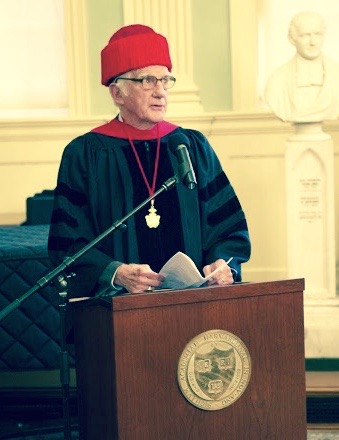
One of the most relevant figures in the field of Higher Education, Prof. Bok served as the 25th president of Harvard from 1971 to 1991. In November 1990, Bok signed an agreement with the then rector of the Universidad Complutense de Madrid and with the King of Spain to found the Real Colegio Complutense.
These are some of the thoughts that Prof. Bok expressed about RCC in an interview published by the RCC Bulletin #35 in 2008:
DB: “The creative and innovative administrators of the Universidad Complutense de Madrid at the time outlined an idea to create a foothold at Harvard University to help Spanish students and scholars study abroad. I had a strong impression that foresighted, imaginative people wanted to make a very determined effort to accelerate the process of opening Spain after the end of the Franco era to become part of the European and world communities. They were taking unusual measures to introduce groups of talented Spaniards to other cultures and educational systems in order to open up their eyes, become more cosmopolitan, and contribute to an awakening process. They saw a partnership with Harvard University as a valuable strategy for Spain to face the competition and challenges of globalization.”
DB: “This idea was also important to me. I wanted to do more to internationalize Harvard and was looking for opportunities for bi-lateral relations with countries interested in such partnerships. Spain was willing to send graduate students and professors to Harvard and the Rector and his supporters were willing and able to help find funds. Harvard wasn’t interested in creating university to university relationships, which is why Spain’s idea of a partnership with Spanish universities and Harvard was so appealing.”
DB: “Harvard had created other partnerships before and since the one with Spain, but none has had such a physical presence or scale of involvement. The Spaniards, from the beginning, wanted to be independent of Harvard University. I understood that because I know that Harvard is a large institution and can swallow up smaller ones.”
DB: “When RCC was in the process of being created, I was very enthusiastic and tried to help by, for example, encouraging people at the Center for European Studies (as it is currently called) to cooperate.”
DB: “My role was primarily to encourage the partnership. The real credit should go to the Spanish academic leaders who were full of ideas and never daunted by the difficulties or expense of bringing their ideas to fruition. They were ideally suited for the task.”