

The Sermon and the American Broadcast of T. S. Eliot’s Murder in the Cathedral
Date and Time
Location
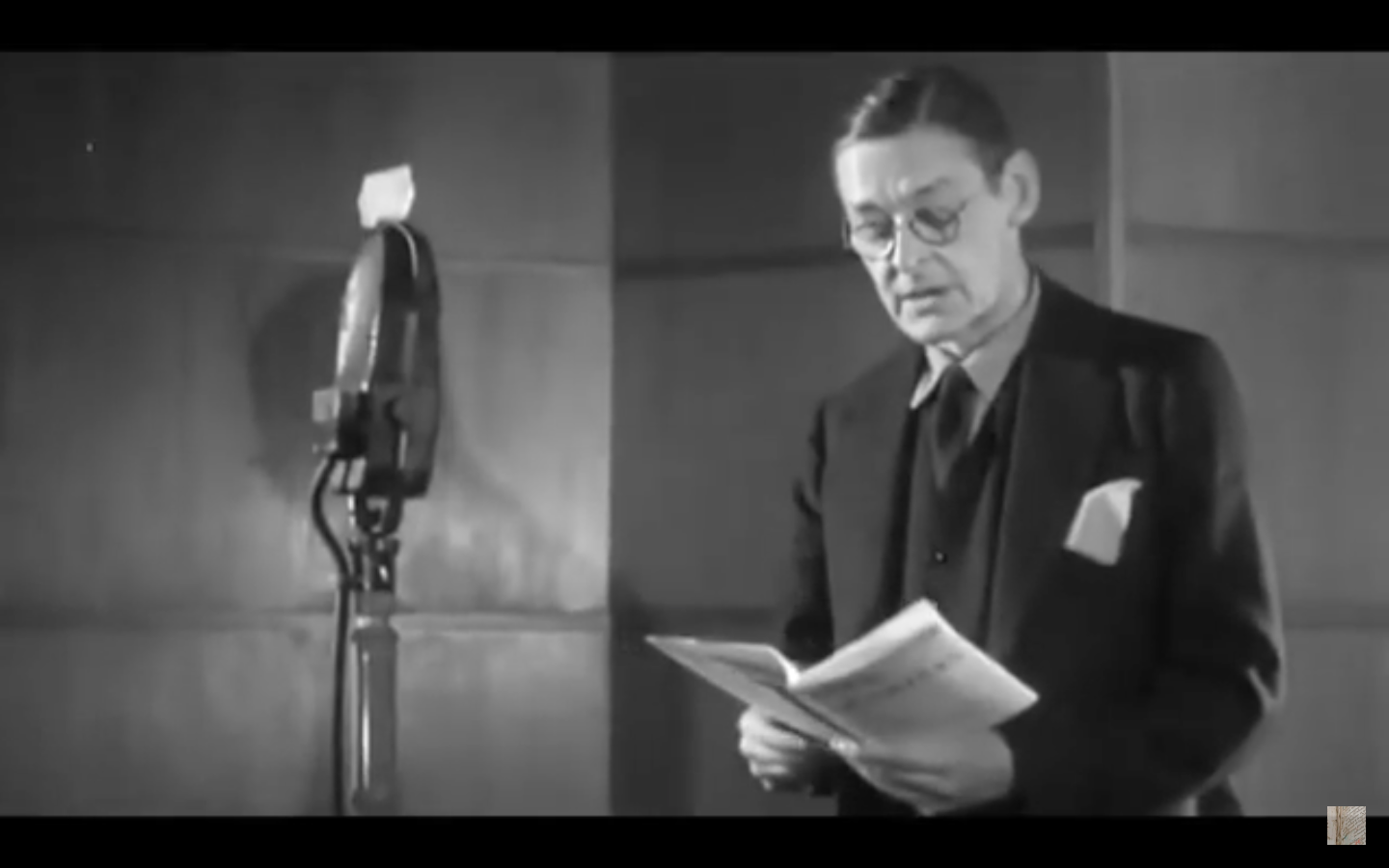
Eliot’s American broadcast of Murder in the Cathedral (1935) was aired in 1937 by the CBS in the wake of the Federal Theatre Project’s production of the play at the Manhattan Theatre. Even if the radio adaptation of Murder in the Cathedral was limited to cuts and a few word changes to fit the one-hour slot of the Columbia Workshop Series, it is significant that Eliot chose to completely delete Thomas Becket’s Christmas sermon of 1170 from the original theatre script. Though it may have been simply a question of sparing the radio audiences of a tedious interlude that added nothing to the action, it is worth reflecting on the reasons why live spectators would have been expected to put up with it while radio listeners would not. The play was originally staged in Canterbury Cathedral, notorious for its bad acoustics. Why would not the radio do? Recent scholarship suggests that listening to a sermon was a very particular experience. It reflected the architectural acoustics of the place of worship to encourage a particular reception of the Christian Word, but which also may be compared profitably to that of a radio broadcast.
I
Speaker: Fabio Vericat, Visiting Scholar in the Department of English at Harvard University