

Seeing in Neutrinos

Date and Time
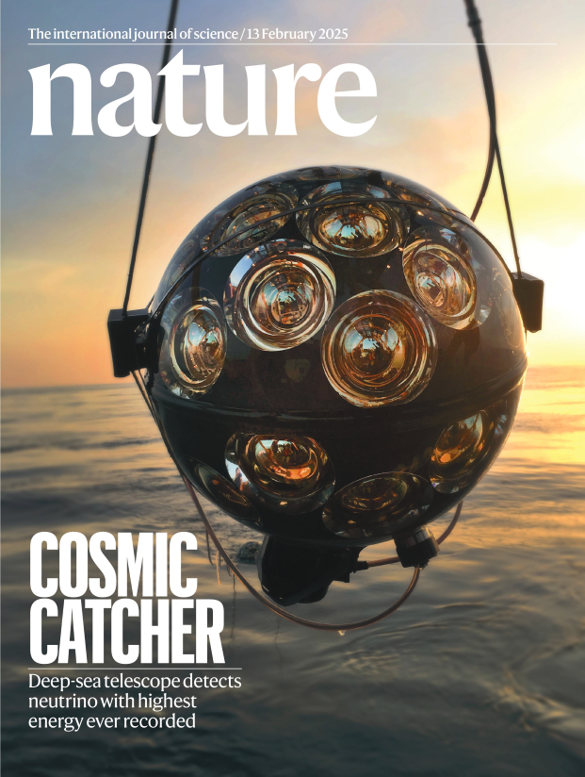
What are the smallest building blocks of everything we know? What is the world around us made of? Answering these questions has been a constant pursuit for humanity, from Empedocles, who proposed that everything was made of four elements, to the present day, when we have explored scales far smaller than the atom and built the Standard Model of Particle Physics. Among its particles, perhaps the least understood are neutrinos. After photons, they are the most abundant particles in the Universe: they are literally everywhere, with trillions passing through your body every second. Yet because they barely interact with matter, they are extremely hard to detect, and they hold some of the biggest open questions in modern physics: Why do they have mass at all, and why is it so tiny? Could they be their own antiparticles? Might they help explain why the Universe is made of matter rather than antimatter? Today, neutrino detectors around the world study their properties, and some are even used as telescopes to observe the cosmos. In this talk, I will explain why these particles fascinate physicists, why the 2026 Nobel Prize in Physics was awarded to Prof. Francis Halzen for his contributions to the IceCube Neutrino Observatory, how neutrino telescopes work, and the principles of multimessenger astronomy
Speaker: Jorge Prado (PhD candidate, University of València; Department of Physics, Harvard University, RCCHU Predoctoral Fellow)