

Dressing in the Early Modern Period: Fashion, Power, Trade, and Everyday Life on Both Sides of the Atlantic

Date and Time
This seminar will be in Spanish (Castilian)
During the sixteenth and seventeenth centuries, clothing was far more than a matter of appearance: garments, fabrics, cuts, and colors could convey wealth, prestige, identity, and social belonging. Dress not only displayed the position a person held in society; it also shaped their public image, negotiated their identity and, on occasion, made it possible to challenge social expectations.
This lecture offers an overview of early modern dress culture, combining its social and cultural dimensions with an examination of the sources and methods used to study it. Drawing on documentary evidence, visual representations, and material culture, it will address both the possibilities and the challenges of reconstructing the clothing practices of societies for which the surviving testimonies are varied and uneven. This approach makes it possible to look beyond elite fashion and engage with the diversity of experiences, practices, and social relations that were articulated through dress.
The connections between cities such as Seville and Havana allow the history of clothing to be situated within a broader Atlantic context, shaped by the expansion of transatlantic networks and by the circulation of people, textiles, raw materials, and cultural practices between the Iberian Peninsula and the Americas. In this light, dress becomes a means of exploring everyday life, exchange, inequality, and social and cultural transformation during this period.
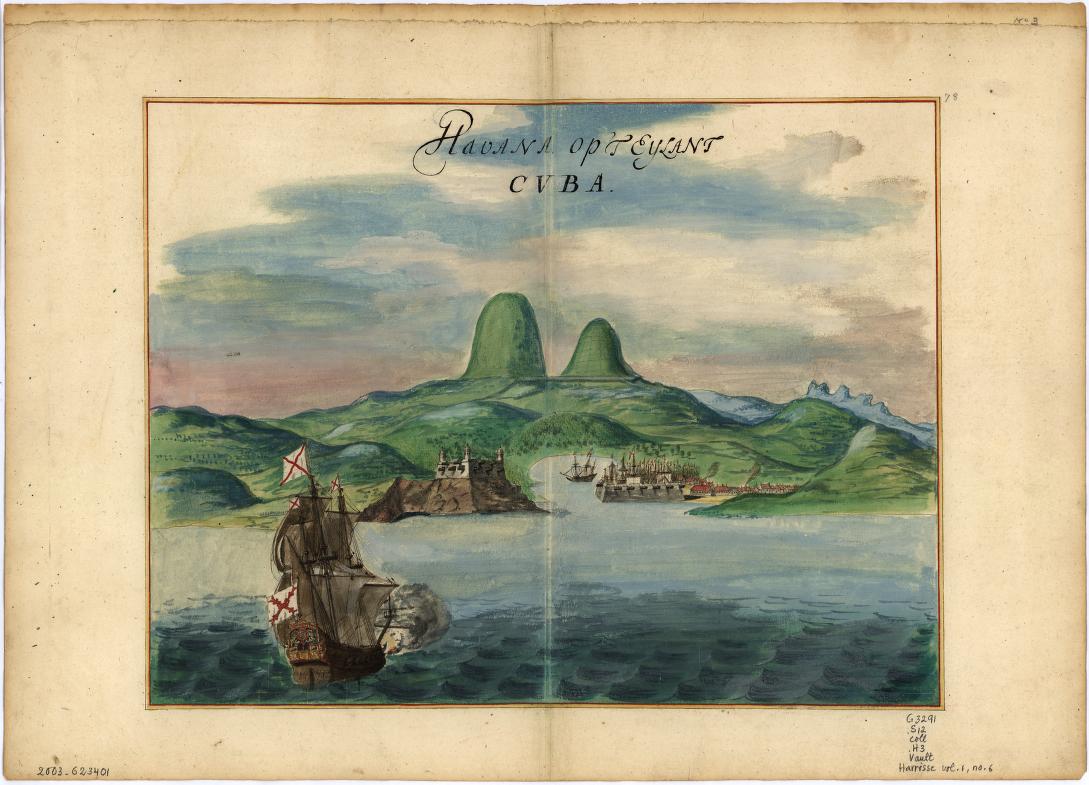
Havana op 't Eyland Cvba - Joan Vinckeboons (ca. 1639) was a Dutch cartographer and engraver employed by the Dutch West India Company and for more than 30 years produced maps for use by Dutch mercantile and military shipping. Source: Library Of Congress Geography And Map Division Washington, D.C. 20540-4650 Usa Dcu
Speaker: Nieves Rico Parreño, PhD candidate in the Humanistic Studies Doctoral Programme (Programa de Doctorado en Investigaciones Humanísticas) at the University of Oviedo, and Predoctoral Research Fellow at the Real Colegio Complutense at Harvard.Vestirse en la Edad Moderna: moda, poder, comercio y vida cotidiana a
ambos lados del Atlántico
*********************************
Vestirse en la Edad Moderna: moda, poder, comercio y vida cotidiana a ambos lados del Atlántico
Durante los siglos XVI y XVII, la indumentaria era mucho más que una cuestión de apariencia; prendas, tejidos, formas y colores podían expresar riqueza, prestigio, identidad y pertenencia social. La ropa no solo permitía mostrar la posición que una persona ocupaba en la sociedad, también construía su imagen, negociaba su identidad y, en ocasiones, permitía desafiar las expectativas sociales.
Esta conferencia propone un recorrido por la cultura del vestir durante la Edad Moderna, combinando su dimensión social y cultural con una aproximación a las fuentes y métodos que permiten estudiarla. A partir de la documentación histórica, las representaciones visuales y la cultura material, se abordarán las posibilidades y los desafíos de reconstruir las prácticas vestimentarias de unas sociedades de las que conservamos testimonios diversos y desiguales, permitiendo esta perspectiva ampliar la mirada más allá de las modas de las élites, acercándose a la diversidad de experiencias, prácticas y relaciones
sociales que se articulaban en torno al vestir.
Las relaciones entre ciudades como Sevilla y La Habana permiten situar la historia del vestido en un contexto atlántico más amplio, marcado por la expansión de las conexiones atlánticas, la circulación de personas, tejidos, materias primas y prácticas culturales entre la península ibérica y América, ofreciendo nuevas perspectivas para comprender los usos y significados del vestido, convirtiéndose el traje en una vía para explorar la vida cotidiana, los intercambios, las desigualdades y las transformaciones sociales y culturales en este periodo.