

Bacterial Translocation after Hemorrhagic Stroke. Effect of the Hematoma Size and the Absence of TLR4
Date and Time
Hemorrhagic stroke (HS) is one of the most devastating forms of stroke, and its clinical course is frequently complicated by infectious complications. Although gut barrier damage (GBD) and bacterial translocation (BT) have been identified as a likely source of post-stroke infections, this relationship had been demonstrated exclusively in ischemic stroke. Similarly, while TLR4 plays a well-documented deleterious role in brain damage after ischemic stroke, its contribution following HS — and particularly its involvement in bacterial translocation — remained poorly understood.
To address these gaps, this study pursued two objectives: to investigate how hematoma size influences GBD, BT, and their inflammatory consequences; and to determine the role of TLR4 in the HS–BT axis using a knockout model. Male Wistar rats and C57BL/6 or TLR4-KO mice were subjected to experimental HS by intra-striatal collagenase injection. At 72 hours, BT was assessed by microbiological cultures of peritoneal organs, hematoma volume by T2-weighted MRI, and peripheral and central/gut inflammation by flow cytometry and immunofluorescence, respectively.
In rats, hematoma severity directly determined the rate of BT — rising from 62% after moderate HS to 100% after severe HS — and BT was accompanied by significant alterations in immune cell populations across multiple organs. In mice, TLR4 deficiency proved protective at multiple levels: TLR4-KO animals developed smaller hematomas, showed a markedly lower rate of BT (25% vs. 57% in wild-type controls), and exhibited reduced peripheral and central inflammation.
These findings establish for the first time that BT occurs after hemorrhagic stroke and is directly determined by hematoma size, while also identifying TLR4 as a key mediator linking brain injury, gut barrier failure, and post-stroke infection — making it a potential therapeutic target in this setting. Light refreshments will be provided.
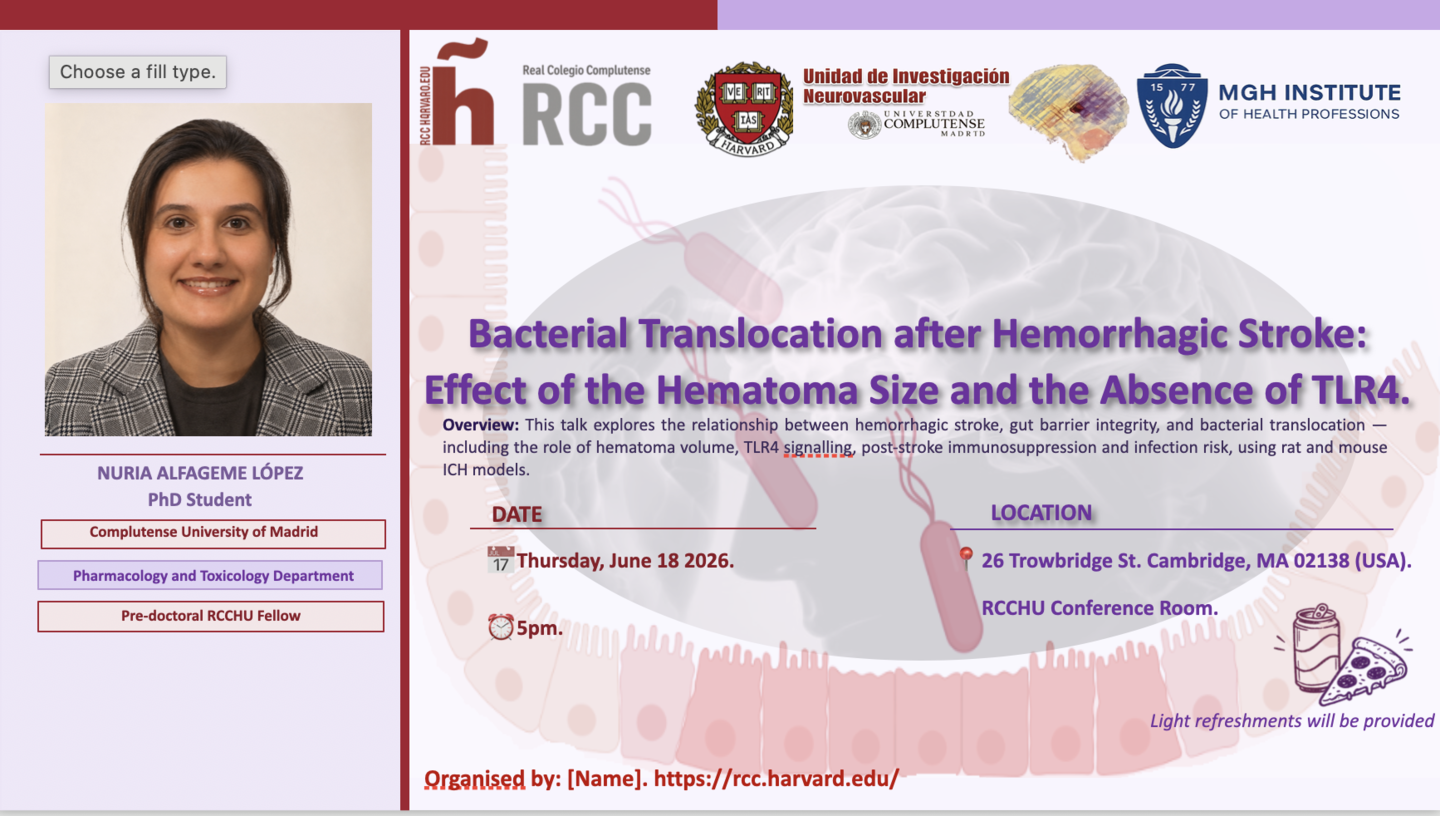
Speaker: Nuria Alfageme López (PhD candidate. Complutense University of Madrid. Pharmacology and Toxicology Department. Pre-Doctoral RCCHU Fellow)