

Adaptive Innovations in Sharks and Rays: Functional Design Shaped by 400 Million Years of Evolution.

Date and Time
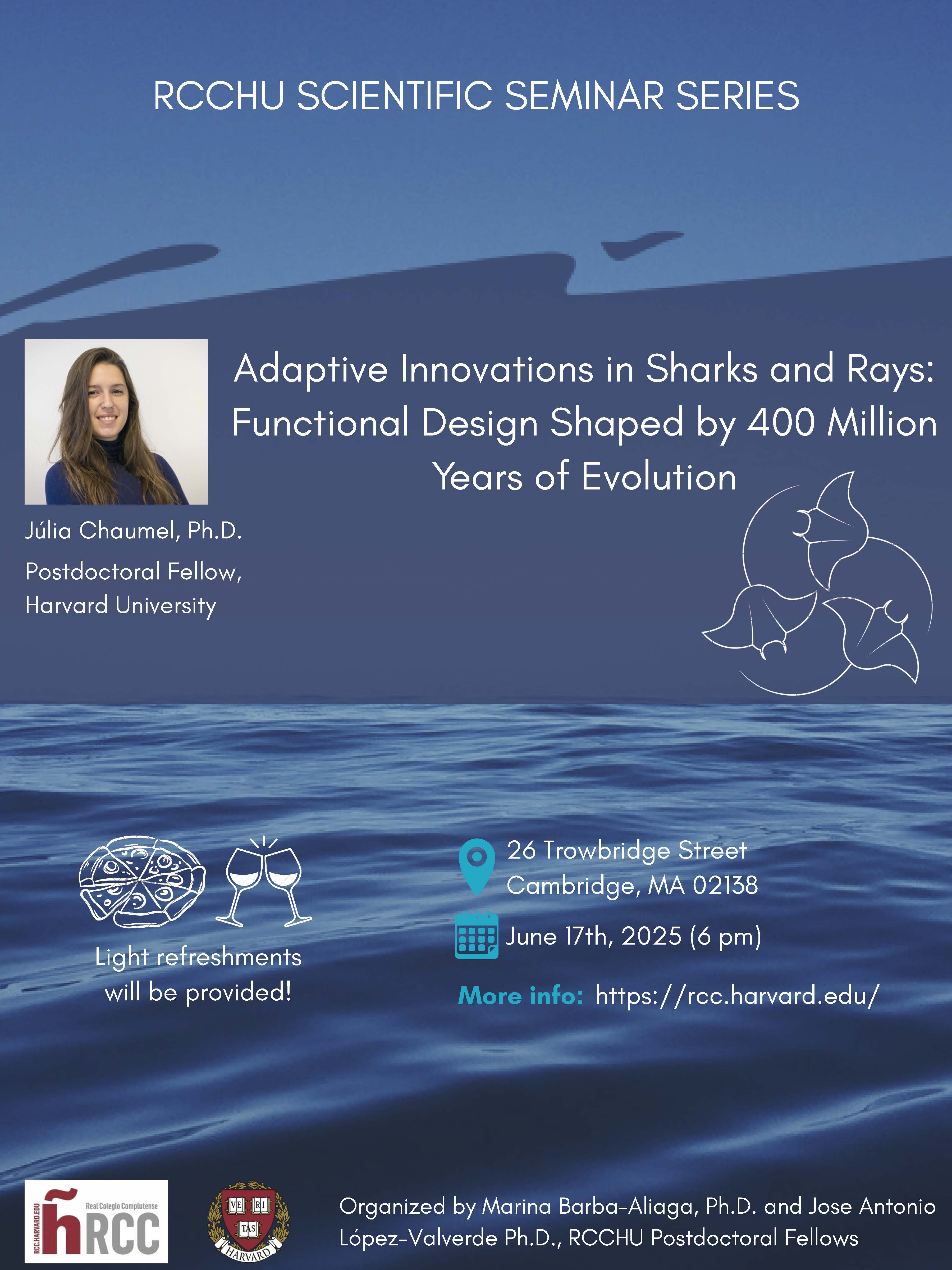
Sharks and rays include some of the largest fishes alive today, such as the whale shark which can reach lengths of up to 18 meters, and are among the longest-lived vertebrates, with certain species living for over 300 years. They inhabit every ocean on Earth, from shallow coastal waters to the deepest oceanic trenches. As one of the most ancient living lineages of vertebrates, evolving well before the age of dinosaurs, elasmobranchs have followed a distinct evolutionary path, diverging from terrestrial animals over 400 million years ago. This deep evolutionary separation has led to a remarkable array of adaptations that set them apart from other vertebrates. Their skeletons lack true bone, being composed entirely of cartilage; their skin is covered in teeth-like structures (denticles); and they rely on a unique suite of sensory systems, including mechanoreception (detection of water movement) and electrosensation (detection of weak electric signals, such as heartbeats). These features enable them to perceive and interact with their environment in ways that other animals cannot. In this talk, I will present a series of projects exploring the functional morphology, biomechanics, and sensory biology that make sharks and rays unique, highlighting how their evolutionary trajectory exemplifies the diversity and innovation of vertebrate life.
Speaker: Júlia Chaumel (Posdoctoral Fellow, Harvard University).
Sponsors: RCCHU; Harvard University.